
For iPhone Duo · iPhone · iPad

Inkblotter

The ink blot test you fold

On the App Store October 23, 2026

27 seconds on iPhone Duo, recorded in the simulator. No sound.

Close your phone to press the ink.

Inkblotter turns iPhone Duo into a sheet of paper folded in half. Drop ink on the right-hand page, close the phone to press it, and open it again to find a mirror-image blot that nobody has seen before.

Then say what you see. A Victorian Examiner, a kindly gentleman-scientist of the 1880s, writes your reading in his casebook: what your answer says about you, part by part, and why the old examiners read it that way.

The fold, in six figures

From the cover to the reading

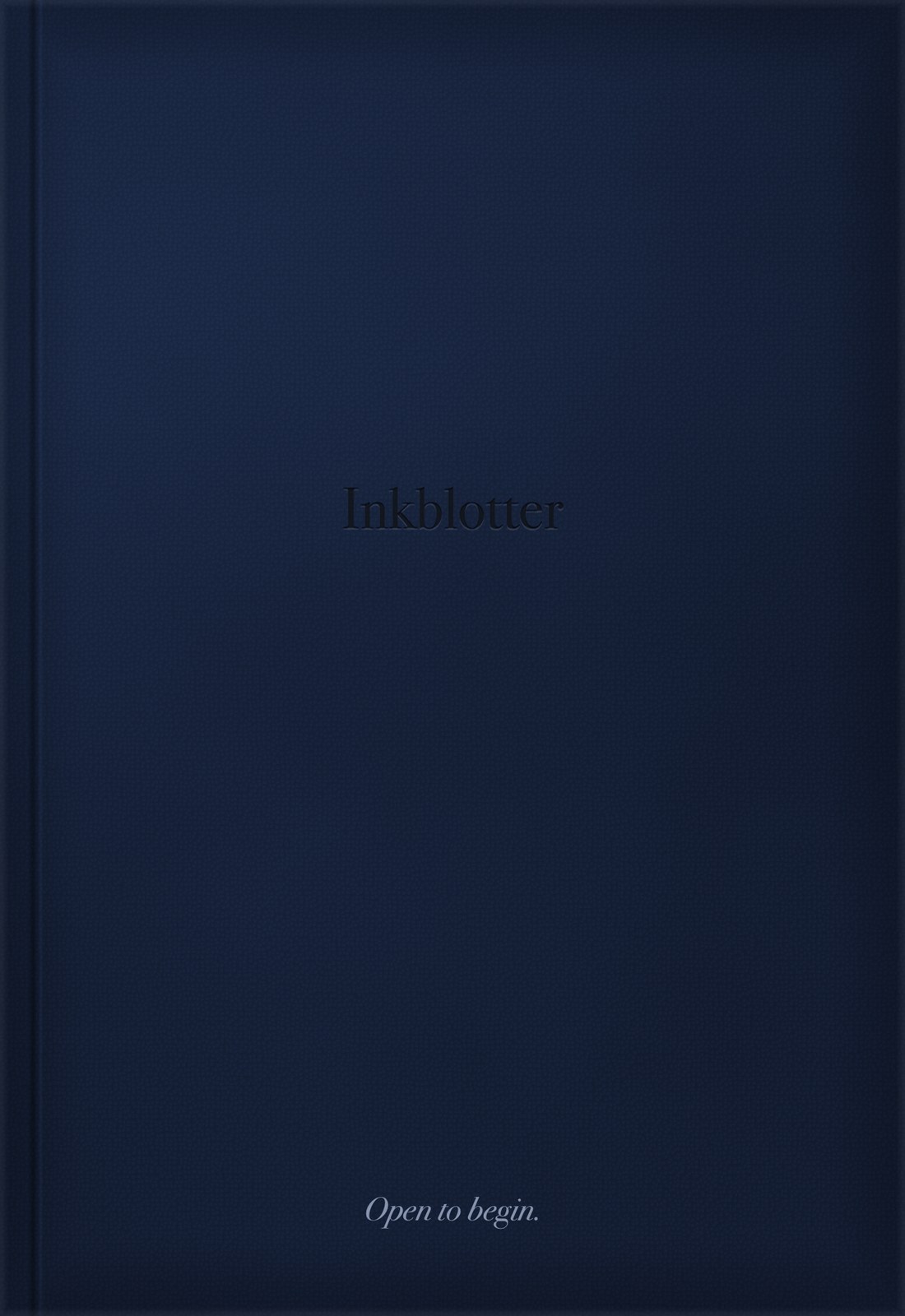
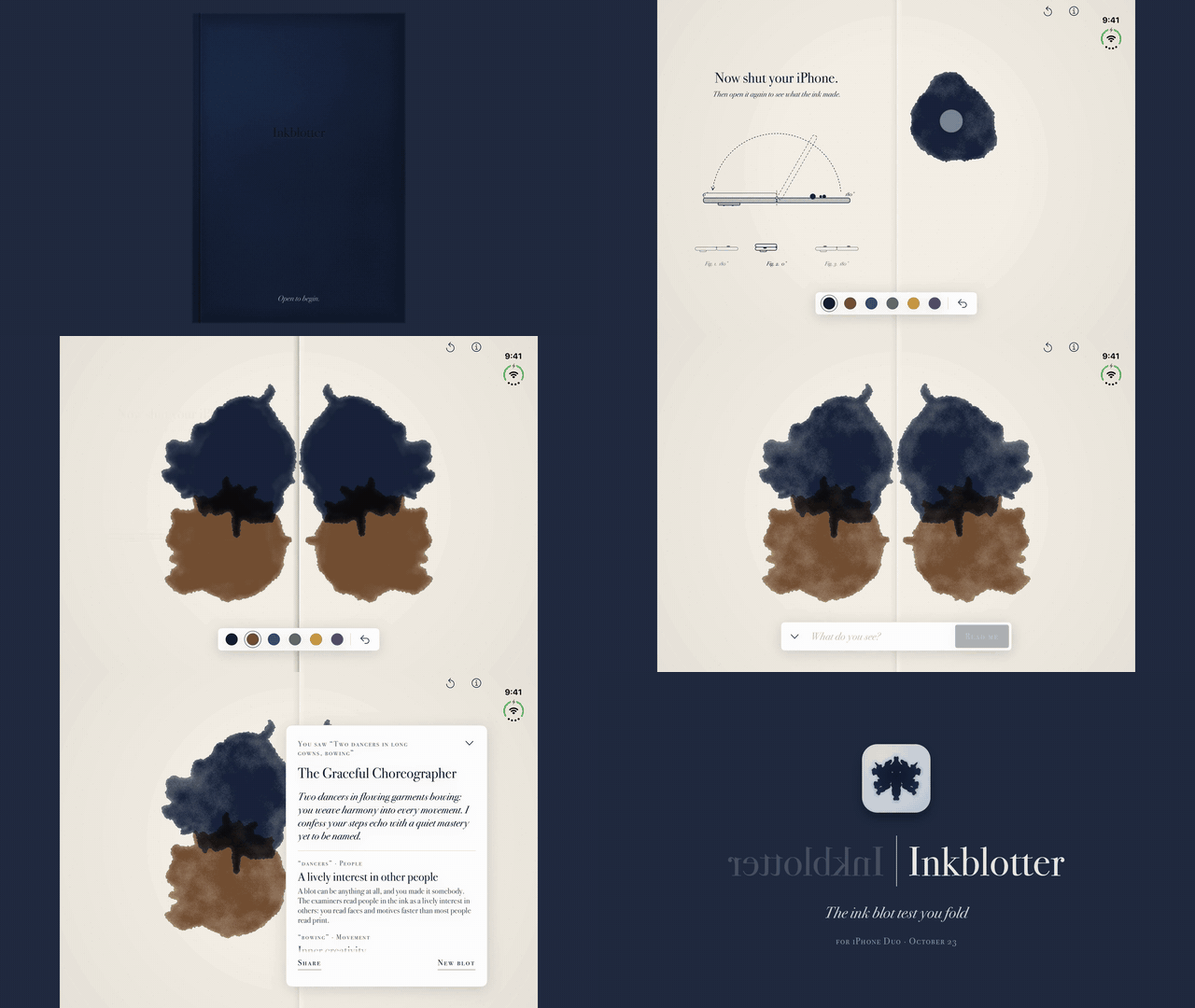
  1. The closed iPhone Duo's outer screen as a plain blue-black notebook cover, with Inkblotter pressed faintly into it and Open to begin at the foot
    FIG. 1The coverShut, the outer screen is a plain blue-black notebook. The name is pressed in, without foil.
  2. The open phone filled edge to edge with a stone-marbled endpaper: blue, slate, cream and ochre spots on blue-black
    FIG. 2The endpapersOpen it and marbled endpapers give way as three leaves turn to a fresh page.
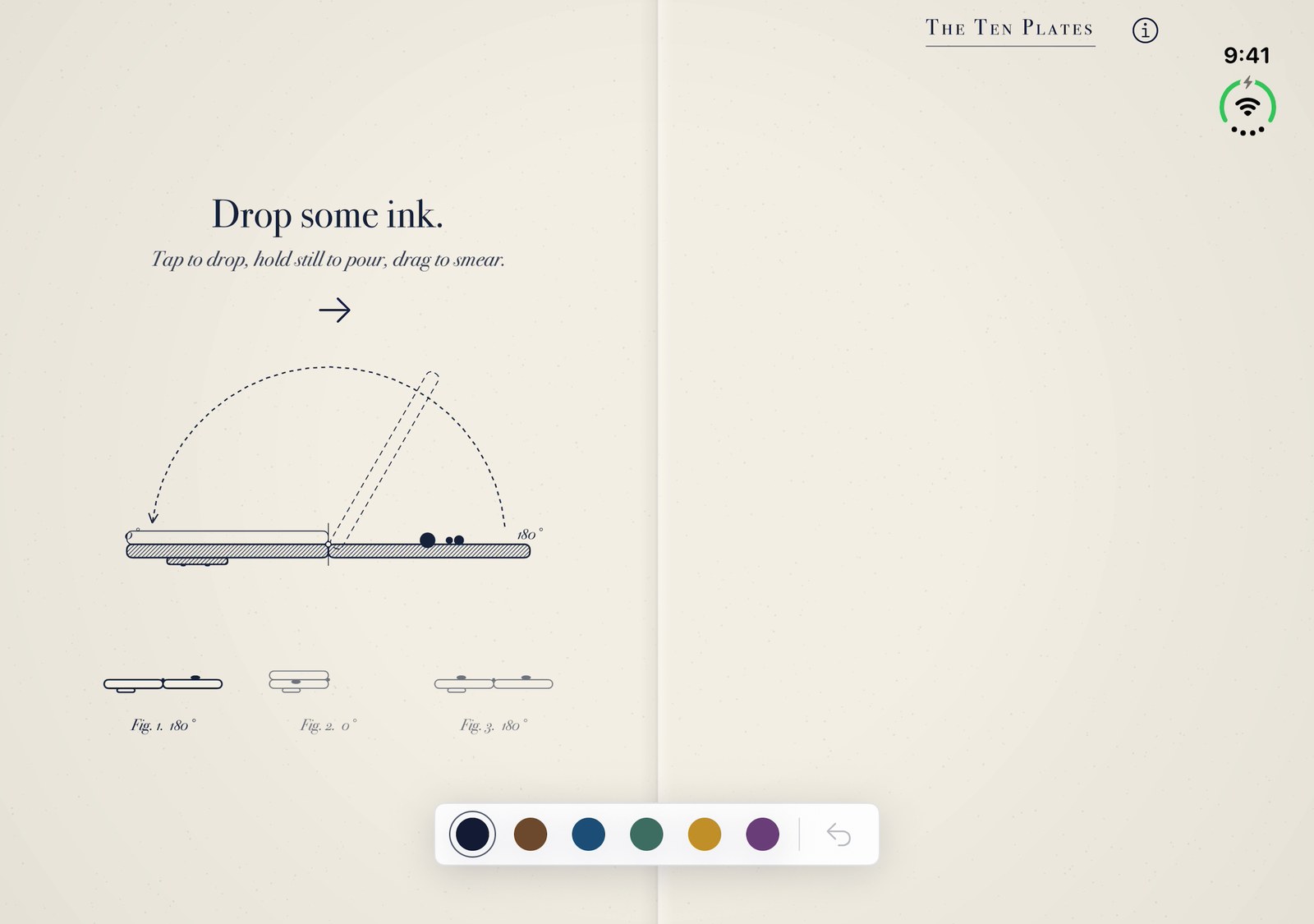
  3. The left page carries an engraved diagram of the hinge closing, under the heading Drop some ink, with an arrow pointing at the blank right page
    FIG. 3The directionsAn engraved plate shows the fold. The hinge in the drawing closes as yours does.
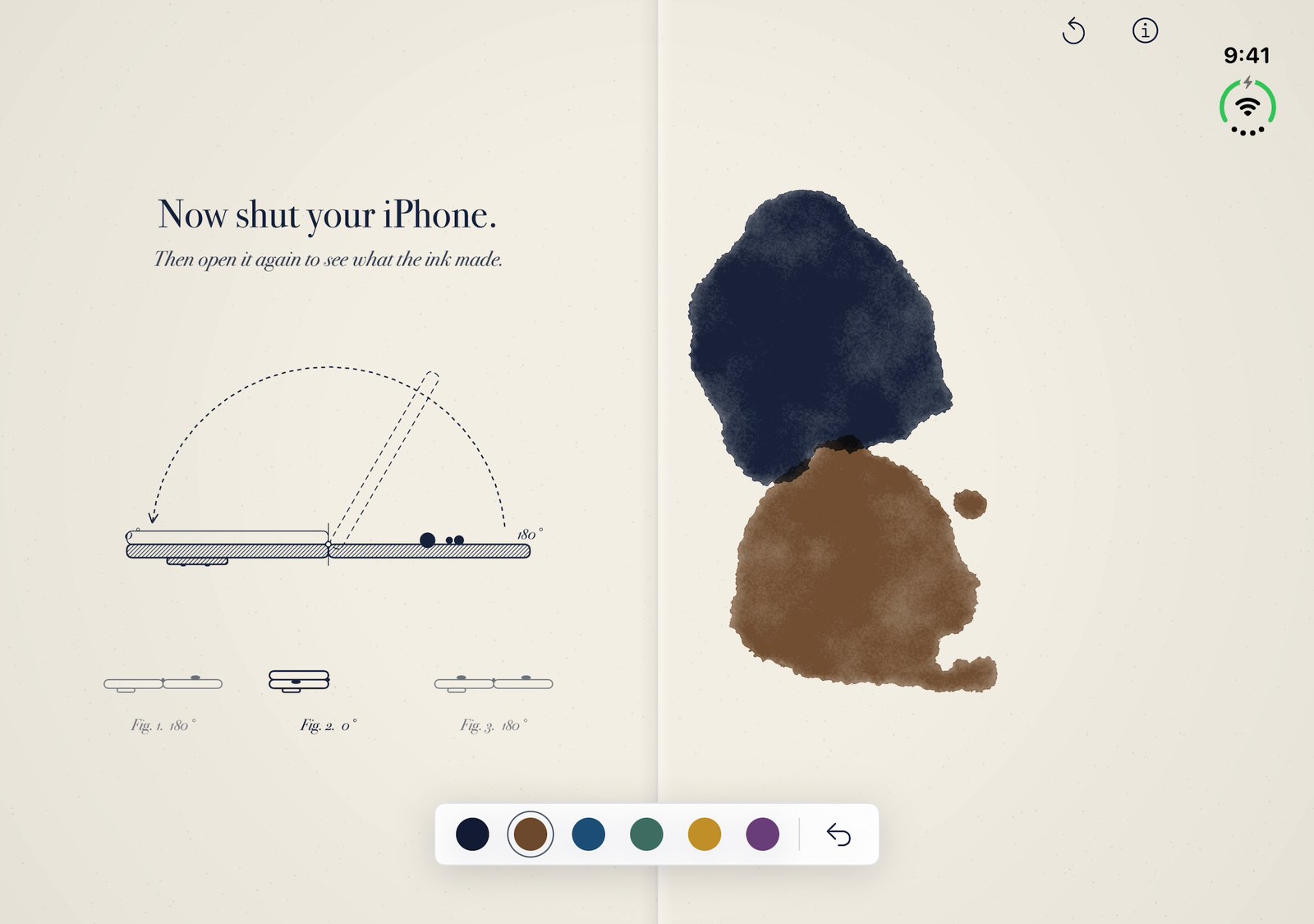
  4. Blue-black and sepia ink pooled on the right page; the left page now reads Now shut your iPhone
    FIG. 4The inkTap to drop, hold still to pour, drag to smear. Ink goes on one page only, as Justinus Kerner did it in 1857.
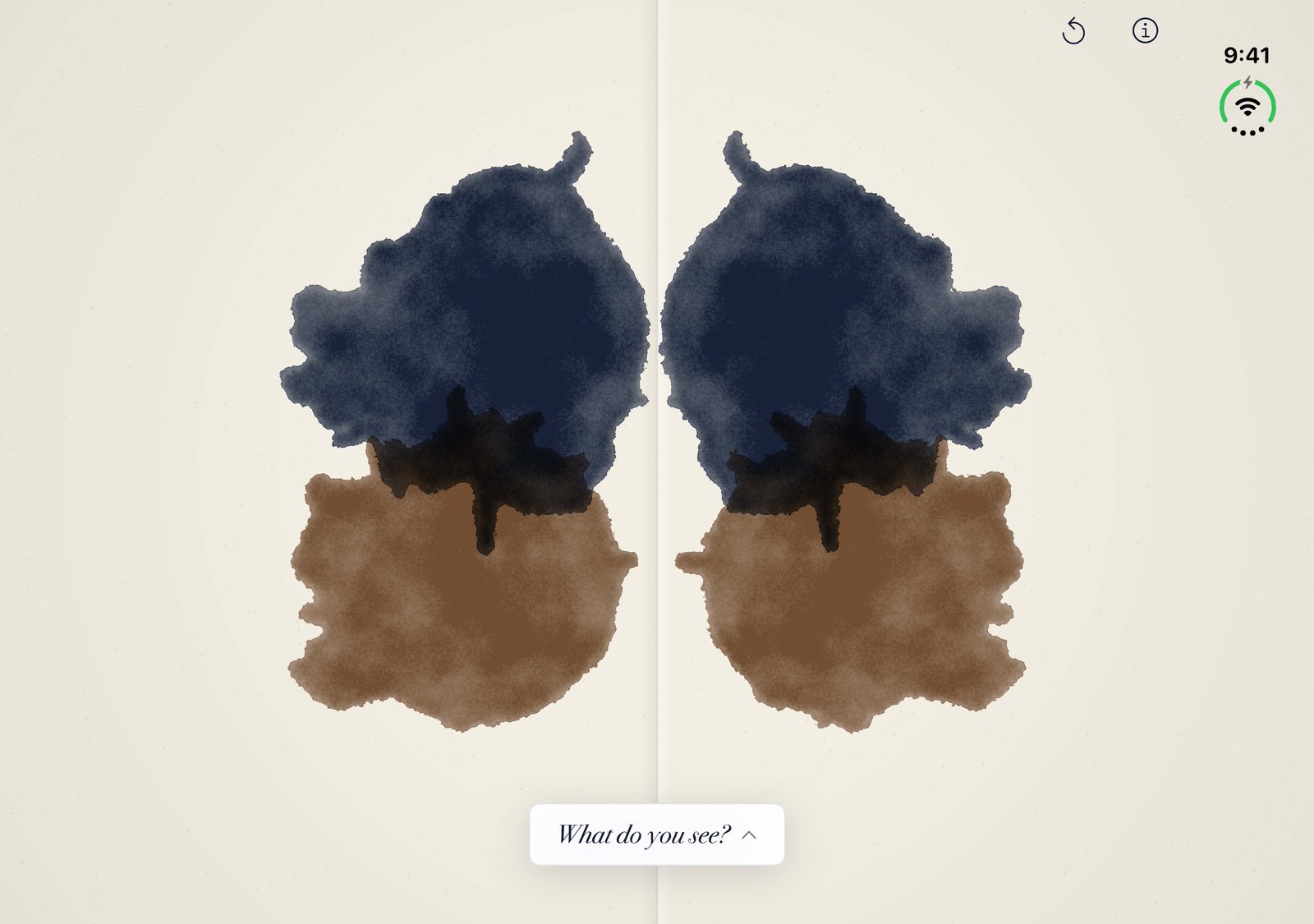
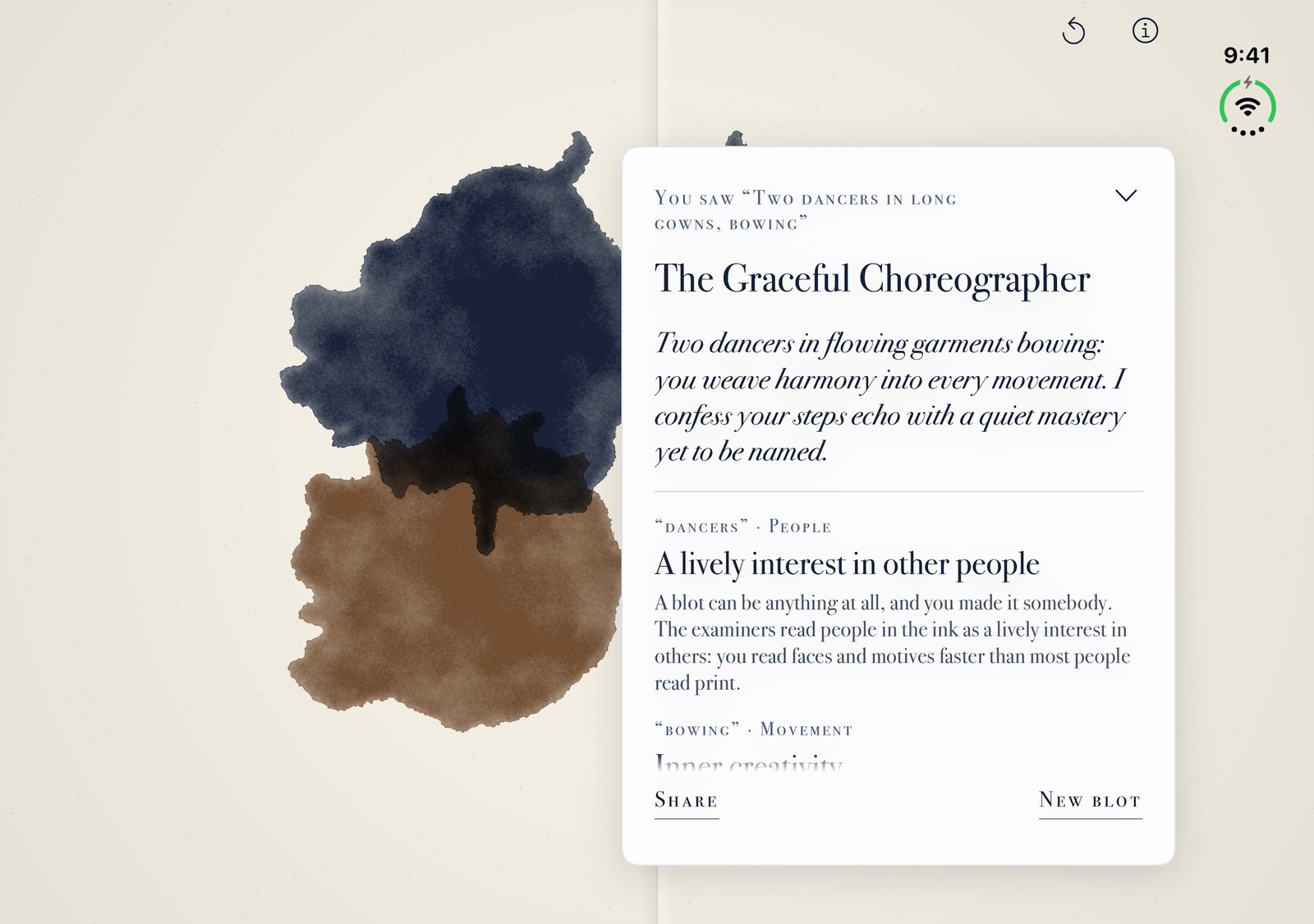
  5. A symmetrical blot spread across both pages, blue-black above and sepia below
    FIG. 5The blotClose the phone to press it. Open it, and the print peels apart in strands.
  6. The reading on the right-hand page beside the blot, titled The Graceful Choreographer: a verdict on what the answer says, then each part of it, dancers and bowing, headed by what it means
    FIG. 6The readingSay what you see, and the Examiner tells you what it says about you, a word at a time, with the old examiners’ reasons.

Also inside

The Ten Plates

The ten inkblots Hermann Rorschach published in Bern in 1921, shown one at a time. Say the first thing you see, then turn the page: what most people saw in that plate, how he would have marked your answer, what later examiners claimed for it, and whether any of that held up.

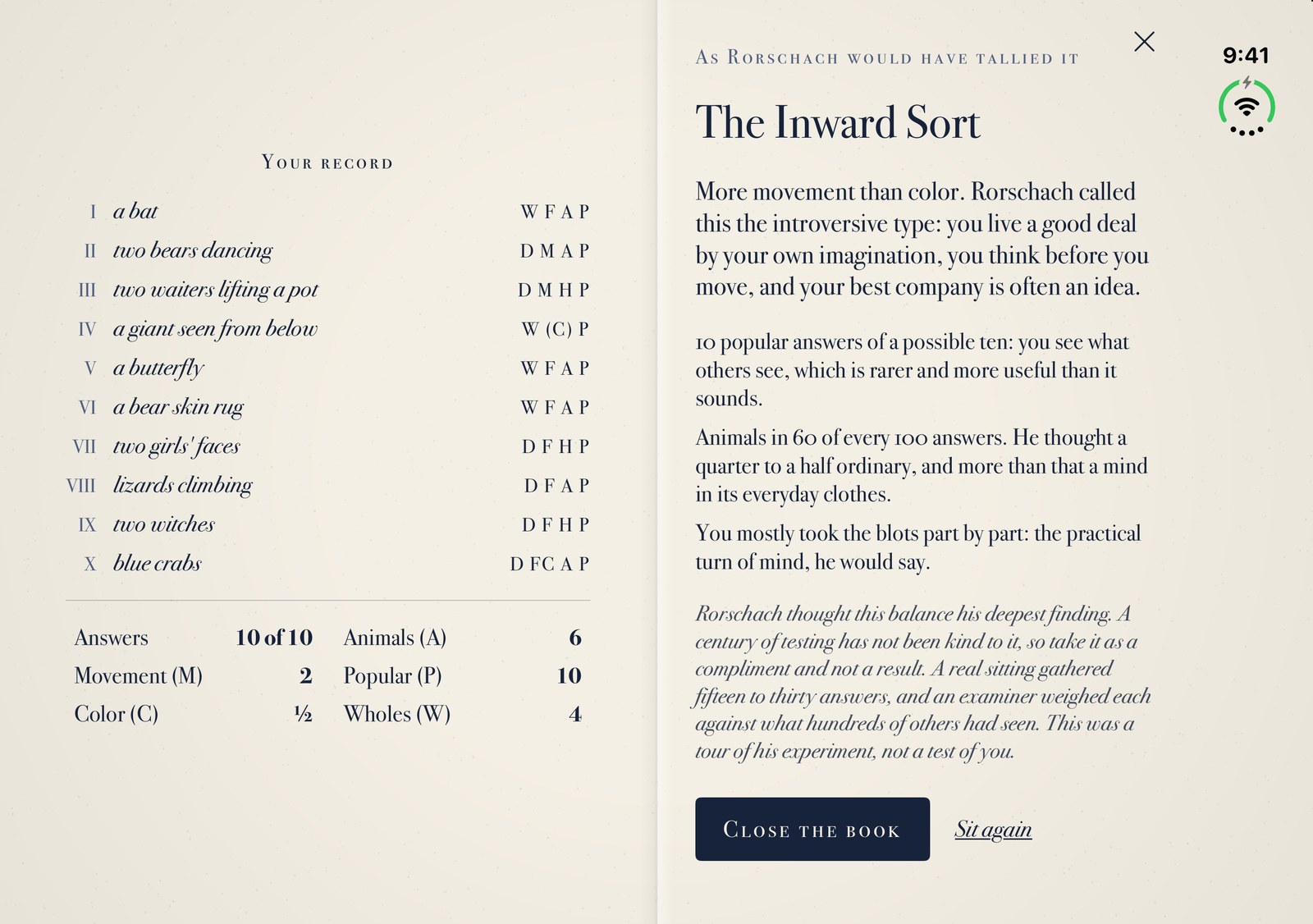
After the tenth plate comes a scoring sheet tallied his way, with a plain note on how a century of testing treated it. It is a tour of a famous experiment, not a test of you.

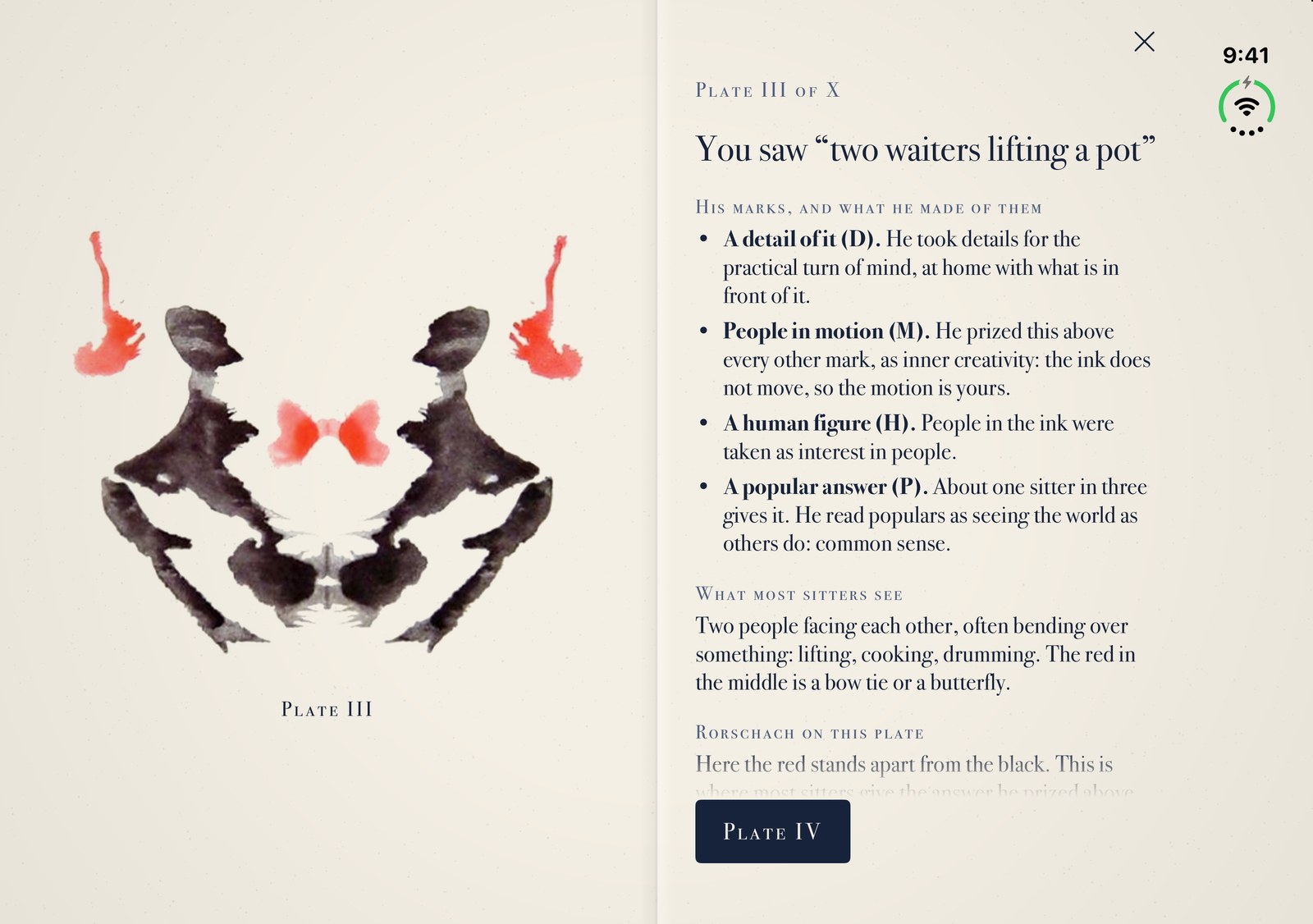
  1. Rorschach's third plate printed on the left page; on the right, the answer two waiters lifting a pot, each of its marks with what he took it to mean, and what most sitters see
    FIG. 7A plate and its storyOn iPhone Duo the plate takes one page and its notes the other.
  2. A scoring sheet listing ten answers with letter codes and totals on the left page; on the right, the result The Inward Sort with remarks
    FIG. 8Your recordEach answer with his marks, and the balance of movement against color he cared about most.

The fold

The phone is the paper

As the hinge closes, the print spreads out from the spine the way ink does between two sheets. Open it again and strands of wet ink stretch across the crease and snap, with haptics and synthesized paper sounds timed to the hinge.

The reading

A century of lore, read kindly

Every reading explains itself, grounded in a review of inkblot research from Kerner’s 1857 klecksography to the 2013 meta-analysis of Rorschach scoring. It leans on what held up, like movement and how you connect things, and it never diagnoses. Readings are written on the phone; where Apple Intelligence is available it adds the Examiner’s own verdict. It’s a parlor game.

The book

Made like a Victorian book

Bodoni type, pages in book proportions, endpapers marbled the way a marbler does it, by throwing drops of color that push each other aside, and ink whose edges measure as rough as the edges of Rorschach’s own 1921 plates. On other iPhones and iPad, a Fold button turns the page.

Fact sheet

Inkblotter 1.0

Developer
The Peninsular Company
Release
October 23, 2026
Price
$2.99
Platforms
iPhone and iPad, iOS 26 or later. Made for iPhone Duo.
Category
Entertainment
Language
English
Privacy
Data Not Collected. No account, no server, no analytics.
App Store
Link to come

Press

Get in touch

inkblotter@thepeninsularcompany.com

TestFlight builds are available for reviews before launch. Ask for one and you’ll have it the same day.

Press kit

Video, stills and icon